
Even the most inspiring cross-country runners, those who eat hills for breakfast and thrive on mud, rely on tools to transform their grit into greatness. While mental toughness and sheer will are paramount – the kind that makes you push through "30 minutes of agony for 12 months of glory" – leveraging the right recommended running apps can be the secret weapon in your training arsenal. These digital companions don't just track your distance; they provide structure, motivation, and insights that empower you to run smarter, overcome limits, and truly enjoy the journey, whether you're navigating urban pavements or challenging trails.
At a Glance: Smart App Choices for Your Runs
- Define Your Goal: Not all apps are created equal; match features to your specific running aspirations (e.g., beginner, competitive, social, trail).
- Key Features Matter: Prioritize GPS tracking, customizable training plans, performance analytics, and community integration.
- Motivation Multiplier: Apps can provide guided runs, virtual challenges, and peer encouragement to keep you consistent.
- Data-Driven Progress: Use insights from your runs to identify strengths, target weaknesses, and prevent overtraining.
- Enhance Mental Toughness: Combine app-provided structure with your inherent discipline to conquer both physical and mental hurdles.
Beyond Basic Tracking: Why Your Run Deserves an App

Running, at its heart, is a simple act: one foot in front of the other. Yet, as Nelson Mandela wisely observed, "In cross-country competition, training counted more than intrinsic ability, and I could compensate for a lack of natural aptitude with diligence and discipline." This isn't just a philosophy; it's a practical truth that recommended running apps help you embody. They transform your raw effort into measurable progress, providing the objective feedback necessary for informed diligence.
Think of an app as your silent, ever-present coach, meticulously recording every stride. It gives you more than just a summary; it offers a detailed log of your pace, elevation changes, heart rate, and even cadence, crucial metrics for understanding your body’s response to varied terrains and training loads. Without this data, improving is a guessing game. With it, every run becomes a step toward a more strategic, disciplined approach, allowing you to fine-tune your efforts and prevent common pitfalls like overtraining or plateauing.
Defining Your Stride: Matching Apps to Your Running Goals
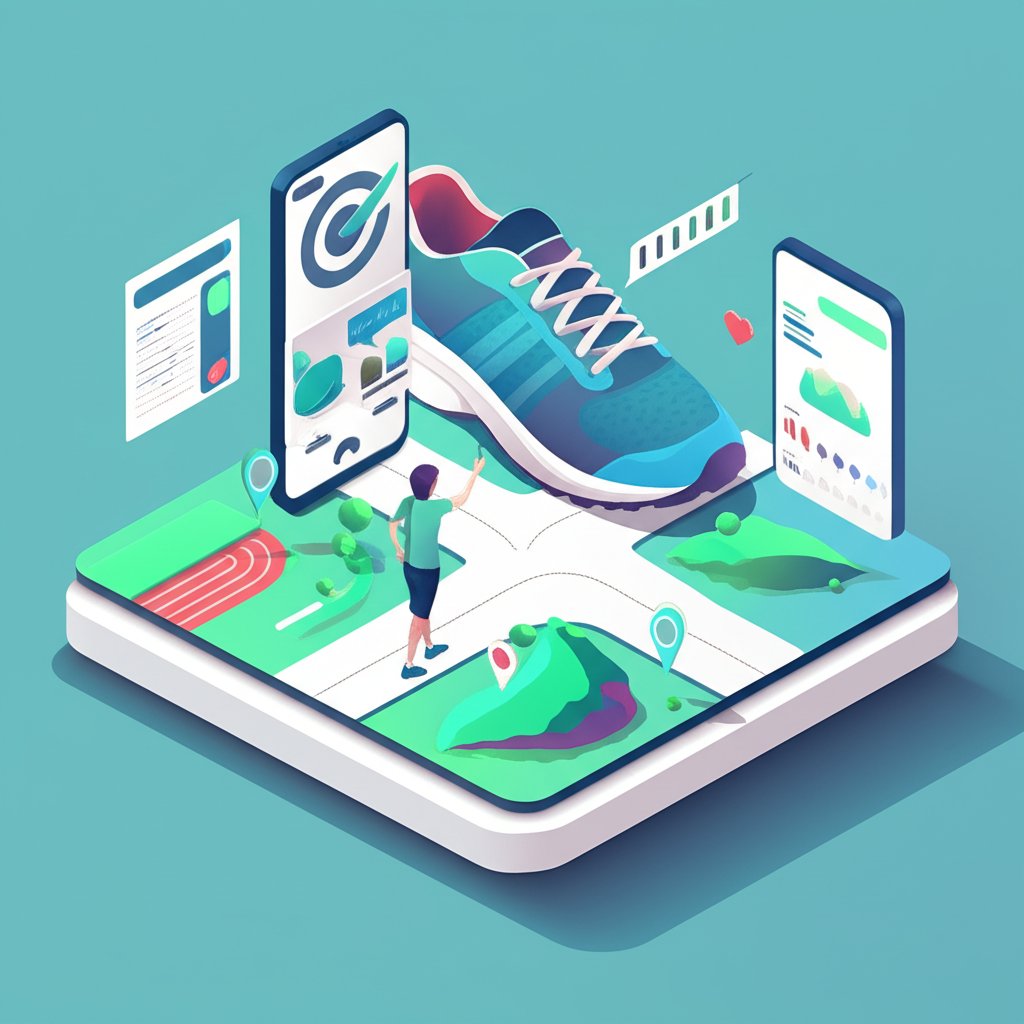
Choosing among the many recommended running apps can feel overwhelming. The key is to first understand your unique running personality and what you aim to achieve. Just as a cross-country runner embraces diverse terrains, your app choice should reflect the varied paths of your running journey.
Are you just starting, needing gentle guidance to build endurance? Perhaps you're a seasoned competitor, seeking granular data and structured plans to shave seconds off your personal best. Or maybe you're a social runner, motivated by connecting with others and sharing achievements. Pinpointing your primary motivation will significantly narrow down the options and lead you to an app that truly serves your purpose. For instance, someone looking to conquer the "little voice inside you that wants you to quit" (George Sheehan) might benefit most from guided runs or motivational audio cues.
For those moments when you're pushing through a tough workout or reflecting on why you even lace up your shoes for a challenge, sometimes a dose of wisdom can make all the difference. Find inspiring cross country quotes. They remind us that true strength often comes from within, complementing the structure that technology provides.
Here’s a breakdown of common running goals and the app types that best support them:
New to Running: Building a Foundation
Goal: Start running consistently, complete a first 5K, or simply build general fitness.
App Needs: Clear, structured beginner programs (like "Couch to 5K"), audio coaching, easy-to-read progress tracking, and encouraging feedback. Focus on simplicity and motivation over complex data.
Performance Driven: Chasing Personal Bests
Goal: Improve speed, endurance, or race times (e.g., marathon, half-marathon, competitive cross country).
App Needs: Advanced training plans (adaptive preferred), interval training support, detailed performance metrics (pace zones, heart rate analysis, cadence), GPS accuracy, and integration with external sensors (HRM, foot pods). The ability to analyze split times and elevation gain is critical here.
Social & Community Focused: Running Together
Goal: Connect with friends, participate in virtual challenges, share progress, and feel part of a broader running community.
App Needs: Strong social feeds, segment challenges, leaderboards, easy sharing options, and integration with popular fitness platforms. Many find that seeing others' progress provides a boost, embodying the "If you want to go far, go together" proverb.
Trailblazer & Explorer: Off-Road Adventures
Goal: Discover new routes, navigate challenging trails, or track runs in remote areas with varied topography.
App Needs: Offline map capabilities, detailed elevation profiles, route planning and discovery tools, points of interest, and robust GPS for accurate tracking even without cellular service. This is particularly relevant for recommended running apps for cross-country enthusiasts.
Data Junkie & Self-Analyst: The Numbers Game
Goal: Deep-dive into every metric, understand physiological responses, and optimize training load.
App Needs: Comprehensive analytics dashboards, custom data fields, export options, integration with health apps, and detailed historical data for trend analysis. These users often cross-reference data points to refine their approach.
The Toolkit: Essential Features of Recommended Running Apps
Regardless of your primary goal, certain features elevate a good running app to an indispensable tool. When evaluating recommended running apps, consider how these core functionalities align with your personal needs:
Pinpoint GPS Tracking and Mapping
A fundamental feature, GPS tracking isn't just for showing where you've been. It precisely measures distance, pace, and speed, and crucially, maps your route. For cross-country runners, detailed elevation profiles are a game-changer, revealing the true effort behind a "we eat hills for breakfast" mindset. Accurate GPS data also enables segment analysis, allowing you to track progress on specific portions of a course, much like tackling individual challenges within a larger race.
Structured Training Plans and Guided Workouts
This is where the "train for it" (Mo Farah) advice comes to life. Many recommended running apps offer a library of training plans, from Couch to 5K programs to marathon prep. Look for:
- Adaptive Plans: Some apps can adjust your plan based on your performance and feedback, mimicking a real coach's responsiveness.
- Audio Coaching: Verbal cues during runs can guide you through intervals, provide motivational boosts, or keep you on pace, especially helpful for staying focused on a challenging run.
- Custom Workout Creation: The ability to design and save your own interval, tempo, or long-run workouts, complete with audio prompts.
Performance Analytics and Insights
Beyond just numbers, the best recommended running apps translate data into actionable insights. This includes:
- Pace Zoning: Understanding if you're hitting your target effort levels for different types of runs (easy, tempo, interval).
- Heart Rate Analysis: When paired with a heart rate monitor, apps can show your time spent in different heart rate zones, indicating aerobic vs. anaerobic effort. This helps in "mental will is a muscle that needs exercise" (Lynn Jennings).
- Progress Over Time: Visualizations like charts and graphs that show improvement in pace, distance, or consistency over weeks and months.
- Recovery Metrics: Some advanced apps integrate with smartwatches to offer recovery time suggestions, crucial for preventing injuries.
Community and Social Engagement
For many, running is a shared experience. Apps with robust social features allow you to:
- Share Activities: Post your runs, photos, and achievements with friends or a broader community.
- Give and Receive Kudos: Offer encouragement and receive positive reinforcement, fostering a sense of camaraderie.
- Join Challenges: Participate in virtual races or distance challenges, adding an extra layer of motivation. This can be especially powerful for remote runners who still want to feel connected.
Music Integration and Audio Cues
Running often pairs well with music or podcasts. Recommended running apps that seamlessly integrate with your preferred music streaming services or allow you to control playback from within the app enhance the experience. Customizable audio cues for distance, pace, or intervals ensure you stay informed without constantly checking your screen.
Safety Features and Gear Tracking
- Live Tracking: Allow chosen contacts to track your location during a run, providing peace of mind, especially on solo adventures or remote trails.
- Gear Tracking: Log the mileage on your running shoes to know when it's time for a new pair, a small but significant detail for injury prevention.
Top Contenders: A Look at Widely Recommended Running Apps
While "the best" app is subjective, several platforms consistently deliver excellent value across different running needs. This isn't an exhaustive list, but a snapshot of popular choices and their strengths.
Strava: The Social Hub for Athletes
Strava excels as a social platform. It's renowned for its "segments" — pre-defined sections of road or trail where runners compete for the fastest times. This gamified approach appeals to the competitive spirit inherent in runners who "love controlling a race, chewing up an opponent" (Adam Goucher). Beyond segments, it offers detailed GPS tracking, performance analysis, and a robust community feed to share activities, photos, and kudos. While basic tracking is free, a premium subscription unlocks advanced analytics, goal setting, and custom route planning.
Nike Run Club (NRC): Guided Motivation in Your Pocket
NRC stands out for its extensive library of guided runs featuring Nike coaches and athletes. These audio-guided experiences offer everything from speed work to mindfulness runs, perfect for someone who needs an external voice to push them, mirroring Muhammad Ali's emphasis on "repetition of affirmations." It provides free structured training plans for various distances, basic GPS tracking, and an intuitive interface. It's a fantastic option for beginners and those seeking consistent motivation without a subscription fee.
Runkeeper (ASICS): Simplicity Meets Customization
Runkeeper offers a clean interface and straightforward GPS tracking, making it a favorite for many. Its strength lies in its highly customizable workout creator, allowing you to build complex interval sessions with ease. It provides performance insights, goal setting, and a community aspect, though less aggressive than Strava. For a more tailored experience with adaptive training plans and live tracking, a premium subscription is available. It’s ideal for runners who appreciate a balance of simplicity and the ability to fine-tune their training.
MapMyRun (Under Armour): Route Discovery and Gear Management
Part of the Under Armour Connected Fitness suite, MapMyRun is excellent for route discovery and creation. Its extensive database allows you to find popular routes near you or map out your own with precision. It also offers comprehensive gear tracking, helping you monitor mileage on shoes and other equipment. While it provides standard tracking and training plans, its mapping capabilities are a significant draw for explorers and cross-country enthusiasts looking to chart new paths.
AllTrails / Gaia GPS: For the True Trailblazers
While not exclusively recommended running apps, these are invaluable for trail and cross-country runners. They specialize in detailed topographical maps, offline navigation, and route planning for hiking and trail running. AllTrails offers a vast user-generated trail database, complete with reviews and photos. Gaia GPS provides even more detailed mapping layers for serious backcountry navigation. If your runs frequently take you off paved paths and into challenging terrain, these apps become essential for safety and exploration.
Integrating Apps into Your "Unstoppable" Mindset
The spirit of cross country is about embracing challenges, from muddy courses to the mental grind of long distances. Recommended running apps don't replace this spirit; they augment it. They become instruments that help you cultivate the "mental will" Lynn Jennings describes and provide the structure that allows you to "train for it!" (Mo Farah).
- Leverage Data for Resilience: When you're struggling on a run, seeing your previous strong performances in an app can be a powerful reminder of what you're capable of. Use performance graphs to show how you've overcome past plateaus, fueling your courage to continue, as Winston Churchill might say.
- Structure Your Discipline: Apps provide the framework for consistent training. By following a plan or hitting specific targets, you're exercising the diligence and discipline that Mandela spoke of, translating effort into tangible progress.
- Connect for Collective Strength: While running is often "raw, animalistic, with no one to rely on but yourself" (Adam Goucher), the community features in apps remind you that you're part of a larger tribe. Sharing triumphs and struggles can provide a sense of belonging and motivation, especially when you need to "go far together."
- Set and Break Limits: Use app features like goal setting and segment challenges to continually push your boundaries. Track your progress against these limits, then "Find your limits—then break them."
Practical Playbook: Getting the Most Out of Your Running App
Once you've chosen a few recommended running apps to explore, here's how to integrate them effectively into your running routine:
- Start with Clear Goals: Before you even download, know what you want. Is it to complete your first 5K? Improve your mile time? Explore new trails? Your goal dictates the features you'll prioritize.
- Explore Features, Don't Be Overwhelmed: Download a couple of
recommended running appsthat seem like a good fit. Spend some time navigating their interfaces and experimenting with basic tracking features on a short, easy run. You don't need to master everything at once. - Customize Audio Cues: If your chosen app offers audio feedback, personalize it. Hearing your pace and distance announced at regular intervals can be incredibly motivating and helps you stay informed without looking at your screen, especially when navigating tricky cross-country terrain.
- Commit to a Training Plan (if applicable): If your app has free or premium training plans, select one that matches your current fitness and desired race distance. Consistency is key; let the app guide you through the planned workouts. This is your digital coach pushing you to "hold on for 30 minutes of agony."
- Engage with Communities Wisely: If using a social app, decide how much interaction you want. Sharing your runs can be motivating, but don't let comparison steal your joy. Focus on your journey; "the competition is against the little voice inside you that wants you to quit."
- Utilize Safety Features: Always enable live tracking if running solo in remote areas, and ensure your trusted contacts know how to use it. This small step adds a layer of security.
- Review Your Data: Post-run analysis is crucial. Look at your pace, elevation, and heart rate (if tracked). Identify areas of improvement or potential overtraining. Don't just log the run; learn from it.
Scenario: Training for Your First Trail Race
Imagine you're aiming for a 10K trail race, your first venture beyond pavement. You've chosen a combination of Nike Run Club for guided trail-specific runs and AllTrails for route scouting.
- Week 1-4: Use NRC's "Longer Runs" or "Trail Runs" series. The audio guidance keeps you focused on effort rather than pace, which fluctuates wildly on trails. Log these runs in NRC, benefiting from its free training structure.
- Week 3 onwards: Simultaneously, use AllTrails to scout potential race routes or similar local trails. Study the elevation profiles and user reviews. You might even use AllTrails to navigate a long training run on unfamiliar terrain, downloading the map beforehand for offline access.
- Race Prep: Compare your NRC-logged runs (e.g., elevation gain) with the AllTrails route profile. This helps you mentally prepare for the course's challenges, ensuring you're ready for whatever the terrain throws at you, embracing the idea that "the footing was really atrocious. I loved it" (Lynn Jennings).
- Post-Race: Analyze your NRC run data. Did you hold back on the ascents? Did you feel strong on the descents? This feedback refines your approach for the next challenge.
Quick Answers to Common App Questions
Are free recommended running apps good enough?
Absolutely. Many popular apps like Nike Run Club, Runkeeper, and Strava offer robust free versions that provide essential GPS tracking, basic performance metrics, and community features. For most recreational runners and even many dedicated trainees, these free tiers are more than sufficient to track progress, stay motivated, and achieve goals. Premium features often add advanced analytics, adaptive training plans, or more niche functionalities, which become more valuable as your running ambitions grow.
How do I choose between so many options?
Focus on your primary goal and the features that directly support it. If social connection is paramount, Strava might be your go-to. If structured, free guided runs are your motivator, Nike Run Club is a strong contender. For trail navigation, consider specialized apps like AllTrails. Don't be afraid to try a few free versions to see which interface and user experience resonate most with you. Ultimately, the best app is the one you'll actually use consistently.
Can apps really replace a coach?
No, not entirely. While recommended running apps offer structured training plans, performance analytics, and motivational cues, they lack the personalized feedback, injury prevention insights, and deep physiological understanding a human coach provides. A coach can observe your form, adapt plans on the fly based on subtle cues, and offer tailored psychological support. Apps are powerful tools to complement your training, but they shouldn't be seen as a full substitute for professional coaching, especially for competitive runners or those with specific health concerns.
What about privacy and battery life with recommended running apps?
Privacy is a valid concern. Always review an app's privacy policy, especially regarding location data and personal information. Many apps offer granular privacy settings, allowing you to control who sees your runs or if your exact starting/ending locations are visible. Regarding battery life, constant GPS usage is a drain. For long runs, ensure your phone is fully charged, consider carrying a portable power bank, or use a dedicated GPS watch that syncs with your chosen app for superior battery performance.
Are specific recommended running apps better for cross country?
While most general running apps can track distance and pace on trails, dedicated apps or those with strong mapping features are superior for true cross-country terrain. Apps like AllTrails or Gaia GPS, or even MapMyRun with its route discovery, provide the topographical detail, offline map capabilities, and elevation data that are crucial for navigating varied terrain. They help you prepare for "woman vs. nature" scenarios and embrace the "mud."
Beyond the Screen: Fueling Your Next Run
Ultimately, recommended running apps are powerful catalysts, not the sole ingredient. They offer structure and insight, helping you quantify your effort and celebrate your progress. But the true magic happens when you lace up, step out the door, and commit to the run itself—the courage to start, the discipline to continue, and the resilience to face whatever challenges the path presents.
Let these digital companions assist you in understanding your effort, planning your training, and connecting with a community of peers. Use their data to learn, adapt, and grow, but never let them overshadow the raw, visceral experience of running. For as Kara Goucher reminds us, the best runs aren't always about race success, but about those moments where running makes you see "how beautiful life is." Equip yourself with the right tools, yes, but always remember to connect with the primitive joy of the run.